
If someone in your city searches for what you do right now, does your business show up?
For most small businesses, the honest answer is no. Not because the business is not good enough, but because nothing has been done to tell Google where they are, who they serve, and why they deserve to appear. That is what local SEO fixes.
This post covers what local SEO actually involves, what makes the biggest difference, and what you can do right now to start showing up for the searches that matter most to your business.
What Is Local SEO?
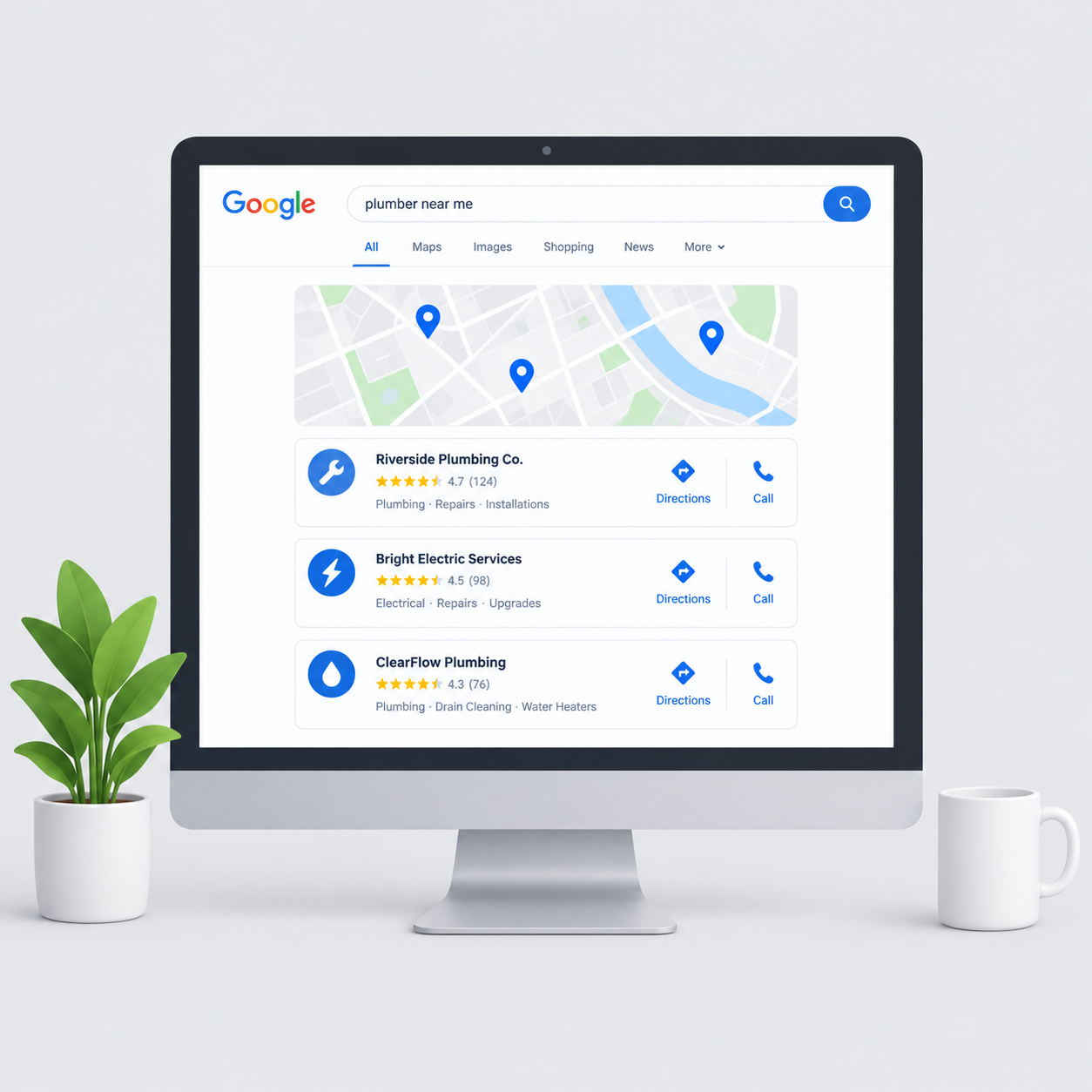
Local SEO is the process of making your business visible in Google searches that have a geographic element. Searches like "accountant in Manchester", "best plumber near me", or "IT recruitment agency London" all trigger local results. Google shows a map with three business listings at the top, followed by regular search results below.
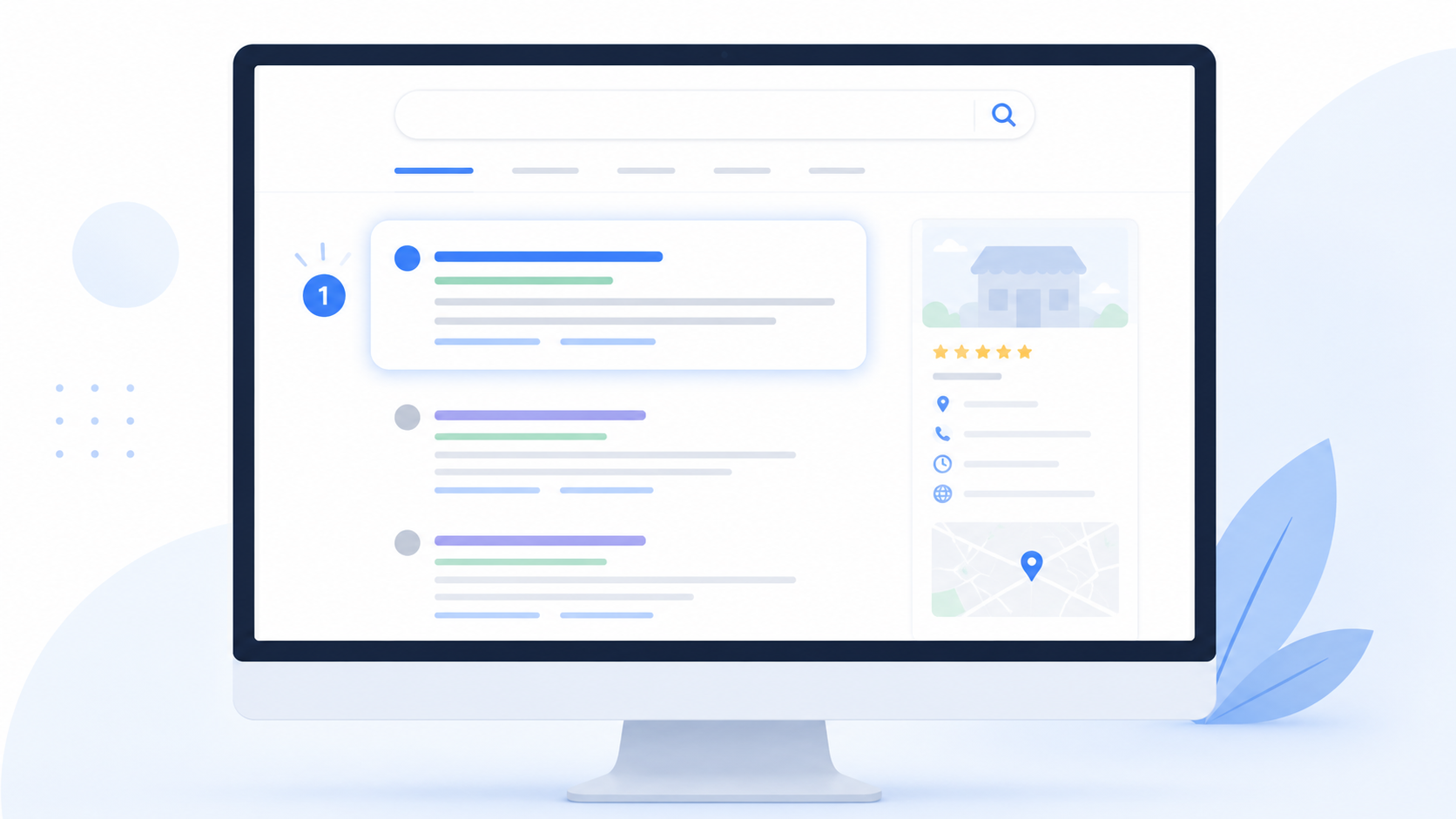
Getting into that map section, or ranking highly in the results beneath it, is what local SEO is designed to achieve. It is distinct from general SEO because it focuses specifically on location-based relevance rather than trying to rank nationally.
For most small businesses, local SEO is the single highest return thing you can do online. The people searching are nearby, they are ready to act, and the competition is often far weaker than you would expect.
Google Business Profile: The Foundation of Local SEO
If you do nothing else, set up and fully complete your Google Business Profile. It is free and it is the single most important local SEO action available to a small business.
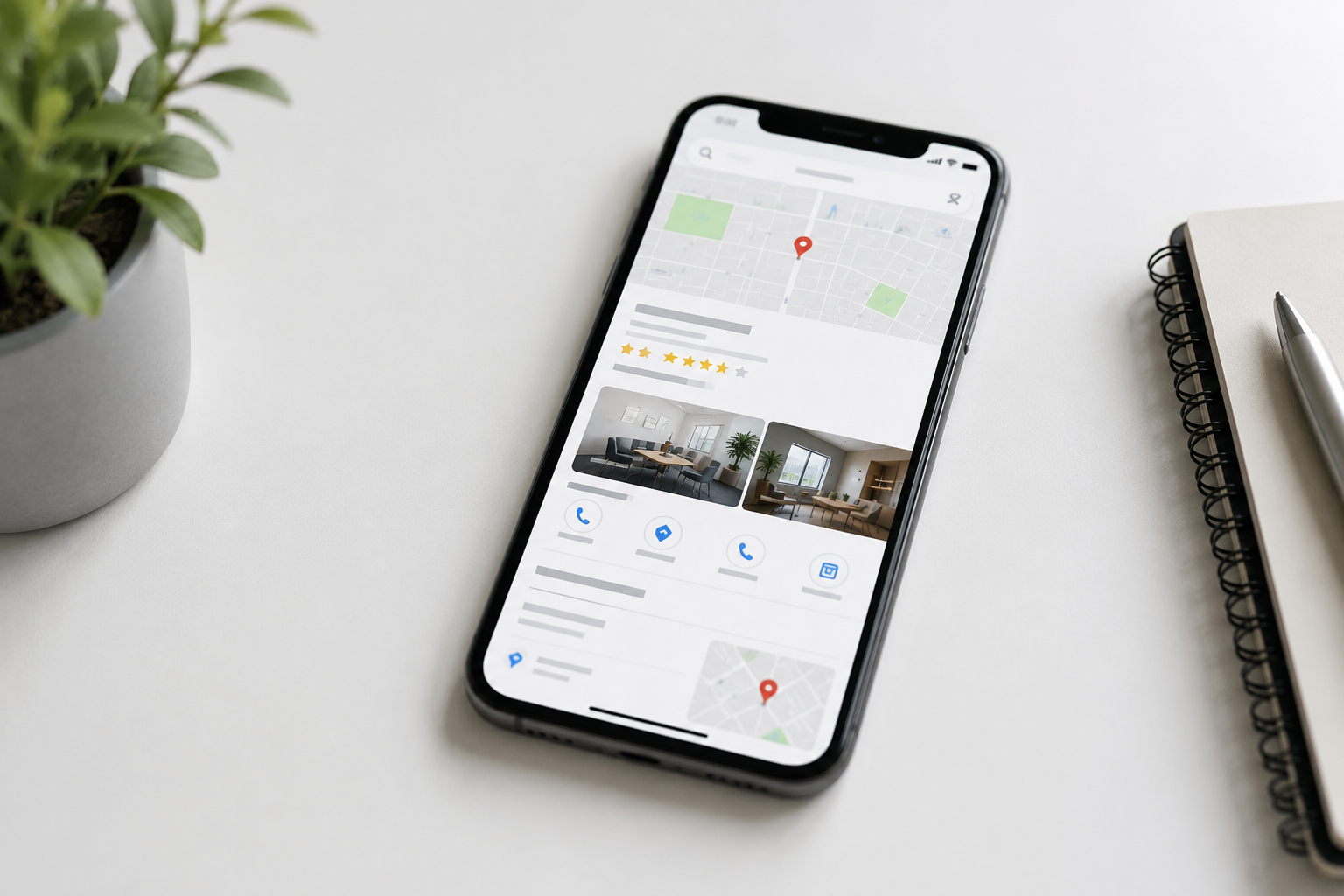
Your Google Business Profile is what appears when someone searches for your business by name, or when Google shows map results for your service area. A complete, well-maintained profile significantly increases your chances of appearing in that top three map section.
What "fully complete" actually means is more than most businesses do. It means choosing the right primary business category, writing a description that includes the services you offer and the area you serve, uploading quality photos, adding your opening hours, listing your services or products, and making sure your address and phone number are correct. Most businesses fill in the basics and stop there, which is exactly why there is usually an opportunity to rank above them.
Your Website Needs to Back It Up
Google does not just look at your Business Profile in isolation. It cross-references it with your website to decide whether your local signals are credible.
That means your website needs to include your city or region in the right places. Your page titles, your headings, and your content should all make clear where you operate. A plumber in Bristol whose website never mentions Bristol is making Google work harder than it needs to.
You should also have a dedicated page for each key service you offer, rather than trying to cover everything on one homepage. A page specifically about "emergency plumbing in Bristol" will outperform a generic services page every time, because it gives Google something specific and relevant to rank for a specific search.
If you serve multiple areas, a separate page for each location is worth considering. Done properly, these pages can rank independently and bring in traffic from several cities or towns at once.
Reviews Are a Ranking Signal
Google factors the quantity and quality of your reviews into where you appear in local search results. More reviews, higher ratings, and recent activity all contribute positively.
This makes actively collecting reviews one of the most important ongoing activities in local SEO. The simplest approach is to ask. Most happy customers will leave a review if they are sent a direct link and a brief message explaining that it helps the business. Very few do it unprompted.
Responding to every review also matters. It shows Google the profile is active and it signals to potential customers that the business engages with feedback. Responding to negative reviews calmly and constructively can actually improve trust more than a page of five-star ratings alone.
Consistency of Your Business Information
One of the less obvious local SEO factors is consistency. Your business name, address, and phone number need to be identical everywhere they appear online. That includes your website, your Google Business Profile, any directory listings, social media profiles, and anywhere else your business is mentioned.
Even small variations like using "St" in one place and "Street" in another can create confusion for Google and dilute your local authority. Auditing and correcting these inconsistencies is a straightforward task that can produce meaningful results.
Getting your business listed in the right directories is also worth doing. For UK businesses, listings in directories like Yell, Thomson Local, and industry-specific directories all create signals that reinforce your location and legitimacy.
Local Keywords in Your Content
Beyond the technical setup, the content on your website needs to reflect the searches your local customers actually use. That requires some basic keyword research to understand what people in your area type into Google when they are looking for your service.
The most valuable terms are usually the ones with clear commercial intent. Someone searching "cost of a loft conversion in Leeds" is much closer to making a decision than someone searching "how do loft conversions work". A piece of content that answers the first question, written for a Leeds-based builder, can rank well locally and bring in precisely the right kind of enquiry.
Publishing useful, locally relevant content regularly gives Google more reasons to rank your site and gives potential customers more reasons to trust you before they make contact.
How Long Does Local SEO Take?
Local SEO tends to show results faster than national SEO because the competition is more limited. For many businesses, the Google Business Profile improvements and basic on-page changes can produce visible movement within eight weeks. More competitive markets take longer.
The businesses that do best at local SEO are the ones that treat it as an ongoing activity rather than a one-off task. Regular review collection, updated content, and occasional profile improvements compound over time into a consistent stream of local enquiries.
The Bottom Line
Local SEO is one of the most underused growth tools available to small businesses in the UK. The searches are happening every day, the competition is often weak, and the cost of getting started is lower than most people assume.
The fundamentals are straightforward: a complete Google Business Profile, a website that mentions where you operate, consistent business information across the web, and a steady flow of genuine reviews. Getting those four things right puts most businesses ahead of the majority of their local competitors.
Varentis is a UK digital agency specialising in SEO, performance websites and digital marketing for businesses that want measurable growth. If you would like to know where your business stands in local search, book a free review.